
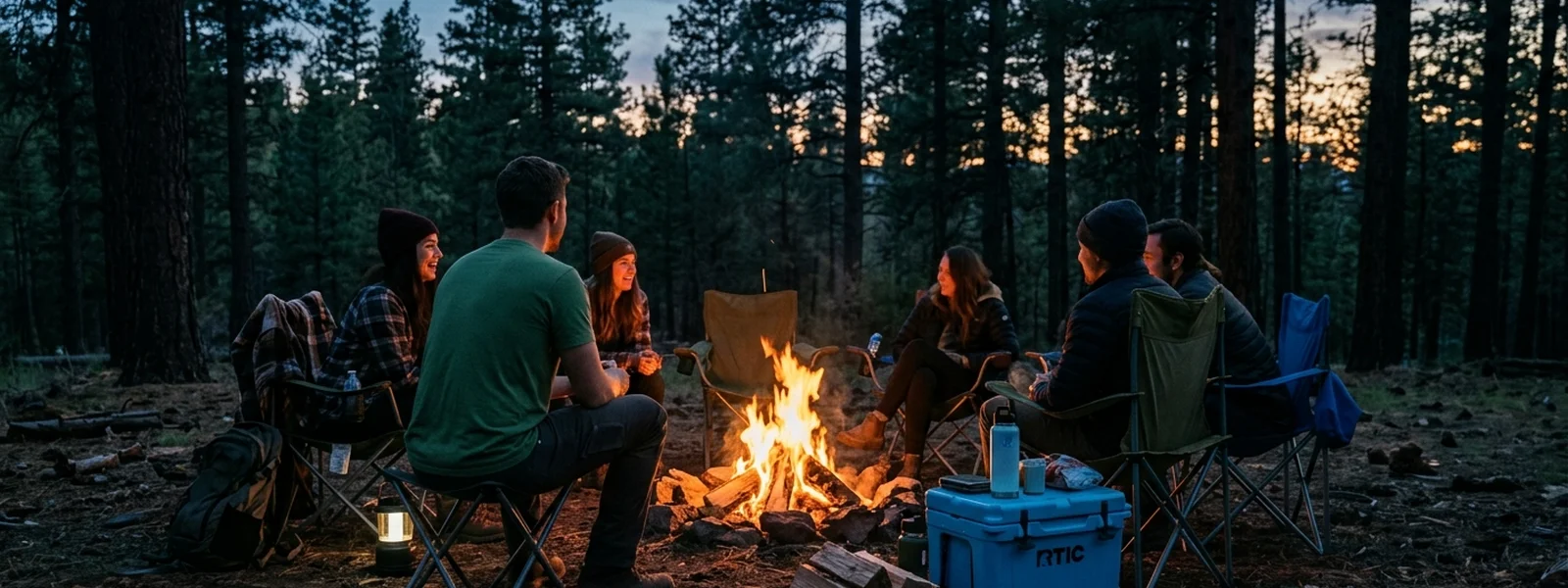
The Summer Camping Trap
Let us talk about July. You pull up to a park entrance after driving for six hours. There are four hundred cars in front of you. The guy in the RV next to you is running his generator loud enough to wake the dead. You are sweating through your favorite shirt before you even unroll the sleeping bag. You spend half your day circling parking lots and the other half walking in a single-file line behind strangers on a trail. This is not fun. This is a theme park with trees.
If you want to keep your sanity, you need to look at visiting national parks in off season. The weather might be a little less predictable, but the payoff is huge. You get your personal space back. You can hear the wind instead of a tour bus. You can actually pull over at a scenic overlook without fighting for a spot.
We started Camp Life Shirts because we wanted camping gear that actually feels like camp—not some slick outdoor brand trying to sell you a lifestyle. We camp in state parks, cook questionable meals over a fire, and argue about the best way to stack firewood. These shirts are for people like us. And people like us usually prefer trees over crowds.
The secret to a good camping trip is knowing when to stay home and when to pack the car. When everyone else is packing up their gear for the year, that is your cue. Here are five parks that completely change character when the calendar flips past summer.
1. Zion in the Winter (No Crowds, Just Canyon)
Summer in Zion means fighting for a spot on a crowded shuttle bus. The park gets so busy that personal vehicles are banned from the main canyon road for most of the year. You wait in line to get on a bus, you wait in line to hike Angels Landing, and you wait in line to use the restroom. It is exhausting.
Winter in Zion is a completely different world. From December through February, the shuttle stops running. You can drive your own car straight into the canyon. The air is cold, usually hovering in the forties or fifties during the day, which is perfect hiking weather. You do not have to worry about heat exhaustion while climbing up those steep switchbacks.
The trails that are usually packed shoulder-to-shoulder are suddenly empty. You can sit by the Virgin River and hear the water moving instead of a hundred people talking. If you want to hike the Narrows, you will need to rent a dry suit from an outfitter in town, but wading through that freezing water with almost no one else around is an experience you will not forget. Just pack extra layers. Once the sun drops behind those massive canyon walls, the temperature plummets fast.
2. Death Valley in the Spring (Wildflowers and Survival)
Do not go to Death Valley in the summer. Just do not do it. It is a giant oven. Your shoes will melt to the asphalt. Your car will overheat. You will spend the entire trip sitting in front of the air conditioning vent wondering why you chose to spend your vacation in a place with the word 'death' in the title.
But spring? Spring is the best time to visit national parks in the desert. From late February through April, the temperatures are actually tolerable. You can hike the badlands without risking your life. You can walk out onto the Badwater Basin salt flats and enjoy the weird, alien landscape without feeling like you are being cooked alive.
If you time it right, and if there has been enough winter rain, you might even catch a super bloom. The barren desert floor explodes with yellow and purple wildflowers. It is a sharp contrast to the harsh environment. Even without the flowers, spring means you can sit around a campfire at night without sweating. That alone makes it worth the trip.
3. Acadia in the Fall (Crisp Air and Empty Roads)
Fall national park trips are popular for a reason. Acadia in October is exactly what you want a fall camping trip to be. The air is crisp, the leaves are turning bright orange and red, and the massive summer crowds have gone back to work and school.
During the summer, driving the Park Loop Road feels like being stuck in rush hour traffic. Finding a parking spot near Jordan Pond is nearly impossible. But in the late fall, the pace slows down. You can hike the Precipice Trail without someone breathing down your neck. You can sit on the rocky coastline and watch the waves crash without a dozen people trying to take the exact same photo.
The mornings are freezing, which means you get to justify wearing your favorite heavy hoodie while boiling water for coffee. This is the kind of camping we live for. If you are debating between coasts for your next trip, you might want to read up on East Coast vs. West Coast Camping: What's the Difference? Acadia in the fall makes a very strong argument for the East Coast.
4. The Everglades in the Dry Season (Fewer Bugs, More Gators)
Camping in the Everglades during the summer is a test of endurance. The humidity is thick enough to drink. The mosquitoes are the size of small birds and they do not care about your bug spray. It is a miserable, sticky, itchy experience that will make you question your life choices.
Winter in South Florida is the dry season. The water levels drop, the humidity breaks, and the bugs retreat. This is when the park actually becomes enjoyable. Because the water recedes, the wildlife concentrates in the remaining water holes. You will see more alligators, turtles, and birds in a single afternoon than you would in a week during the summer.
You can rent a canoe and paddle through the mangrove tunnels without constantly swatting at your face. You can hike the boardwalks in a t-shirt and jeans without sweating through them in ten minutes. It is one of the few places in the country where winter camping means wearing a light long-sleeve shirt instead of three layers of fleece.
5. Arches in Late Fall (Snow on Red Rocks)
Arches National Park has become so popular that they had to implement a timed entry system just to manage the chaos. The line of cars waiting to get through the front gate in July is legendary, and not in a good way. The heat radiating off the red rocks is brutal. There is almost no shade anywhere in the park.
If you want to understand avoiding crowds at national parks, go to Arches in November or February. The timed entry system is turned off. You can drive right in. The parking lot at Delicate Arch will actually have empty spaces. You can hike the Devil's Garden loop without feeling like you are in a crowded mall.
The best part about the off-season here is the weather. The sky is a sharp, clear blue. If you are lucky, you might catch a light dusting of snow on the red rock arches. The contrast of white snow, red rock, and blue sky is incredible. It is cold, especially when the wind picks up, but that is what camp blankets and good jackets are for.
Why Off-Season is the Best Season
Camping is supposed to be about getting away from the noise. It is hard to do that when you are surrounded by thousands of other people trying to do the exact same thing. Visiting national parks in off season requires a little more planning, but the reward is a genuine connection to the place you are visiting.
You have to be prepared for the cold. You have to check the park websites for road closures and limited services. The visitor centers might have shorter hours, and the park restaurants might be closed. But that just means you have to rely on your own camp cooking, which is half the fun anyway. Bring more firewood than you think you need. You always need more firewood.
There is something deeply satisfying about waking up in a freezing tent, unzipping the door, and seeing your breath in the air. You put on a cold pair of boots, get the fire going again, and wrap your hands around a warm mug of coffee. You look around the campground and realize there are only three other tents in the whole loop. That is the feeling we are chasing.
Off-Season Survival Rules
If you are going to try this, you need to be smart about it. Summer camping is forgiving. If you forget a blanket in July, you might be a little uncomfortable. If you forget a blanket in November, you are going to be miserable.
First, layer everything. Do not just rely on one massive coat. You want a good base layer, a solid hoodie or fleece, and a windproof outer layer. You will be freezing in the morning, sweating during your afternoon hike, and freezing again as soon as the sun goes down. You need to be able to adjust.
Second, upgrade your sleeping pad. A lot of people think a cold sleeping bag is the problem, but usually, it is the cold ground stealing your body heat. A sleeping pad with a high R-value will change your life on a cold weather trip.
Third, keep your water from freezing. Freeze water bottles before you leave for summer trips, but do the opposite for winter. Keep your water filter inside your jacket or at the bottom of your sleeping bag. If the internal filter freezes, it breaks, and then you are boiling water for the rest of the trip.
The Bottom Line
If you are tired of fighting for campsite reservations six months in advance, change your calendar. Let everyone else have the parks in July. Let them deal with the traffic jams and the heat.
Pack your car in October, or February, or April. Bring a warm hat and a good attitude. If you are looking for more ideas on where to go when you do not have a full week off, check out The Best Camping Near Major US Cities for a Quick Getaway. The woods are out there waiting, and in the off-season, they are finally quiet.

Published by Camp Life Shirts
Wear the Wilderness
Frequently Asked Questions
What is the cheapest time to visit national parks?
The cheapest time to visit is usually during the winter or late fall. Campgrounds often lower their rates, and many parks have free entrance days scheduled during off-peak months.
Are national parks open in the winter?
Most national parks remain open year-round, though specific roads, visitor centers, and campgrounds within the park may close due to snow. Always check the official park website for current conditions before you pack the car.
Do I need reservations for national parks in the off-season?
While summer often requires booking six months out, off-season camping is much more flexible. Many parks switch to first-come, first-served camping in the winter, though it is still smart to check ahead.
Can you camp in national parks during winter?
Yes, winter camping is allowed in many parks, but you need the right gear. A cold-weather sleeping bag, an insulated sleeping pad, and proper layers are essential for staying warm when temperatures drop.
Is it safe to hike in the off-season?
Hiking in the off-season is safe if you are prepared. Trails can be icy, muddy, or covered in snow, so bringing traction cleats for your boots and checking trail conditions with a ranger is highly recommended.
First Look at New Camping Shirt Drops
New designs, camp tips, and first access to new camping shirts — straight to your inbox, no fluff.