
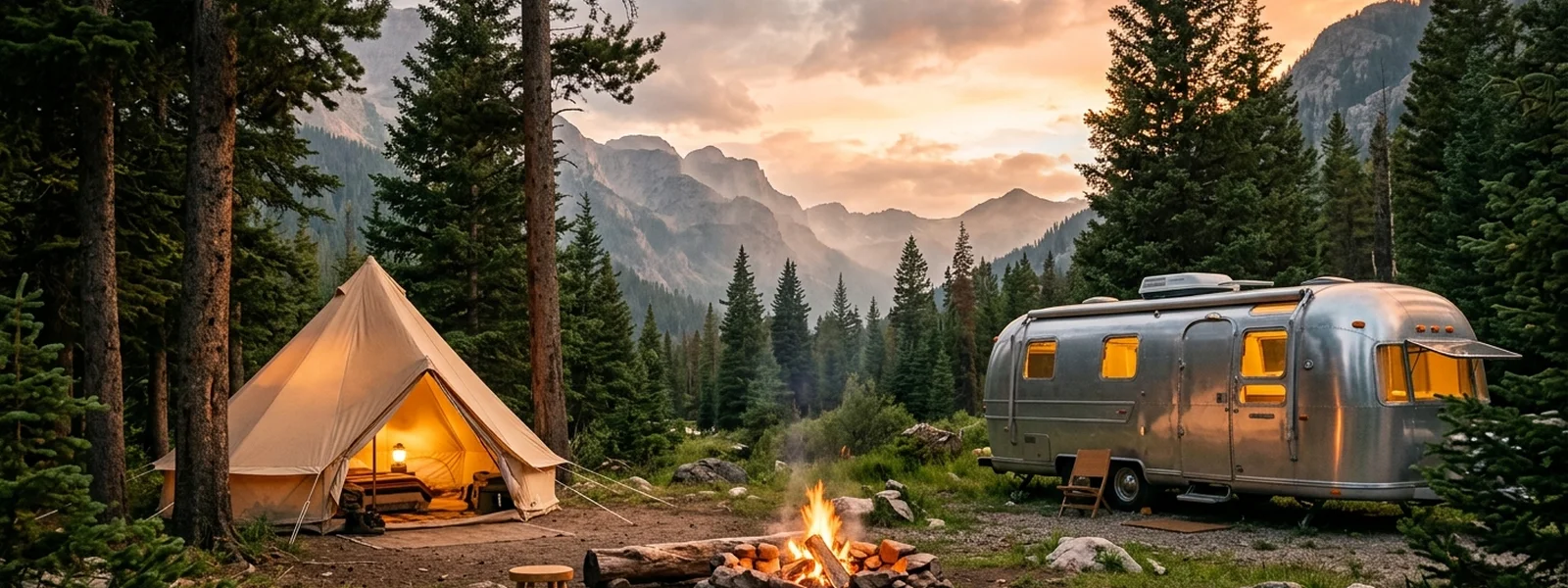
Welcome to the reality of the open road. You spent months watching videos, installing insulation, and dreaming about waking up next to a mountain stream. Now the van is packed, the tank is full, and you are staring at a map with a mild sense of panic. This is completely normal. Building a solid van life road trip planner is less about creating a rigid schedule and more about preparing yourself for the unpredictable nature of living in a metal box on wheels. The road does not care about your itinerary. It will throw flat tires, detours, and unexpectedly beautiful campsites your way. You need a strategy that bends without breaking.
Whether you are taking a two-week vacation or moving into your rig full-time, the way you prepare dictates the quality of your trip. We have all been the person pulled over on the side of a dark highway, desperately searching for cell service to find a place to sleep. It is not fun, and it is entirely avoidable. A good van life road trip planner gives you a framework. It tells you where you are generally heading, how you will find resources along the way, and what to do when things inevitably go sideways. Let us get into the real way to prepare for a long haul, minus the polished social media filters.
Flexible Itineraries: Why Strict Schedules Fail
The fastest way to ruin a road trip is to plan every single hour of it. If you map out your days with military precision, you are just recreating the office job you are trying to take a break from. When figuring out how to plan a van life trip, the most important word to remember is flexibility. You are going to hit traffic in places that do not even look like towns on the map. A tire will go flat on a gravel road. You will find a roadside diner that serves pie so good you decide to stay in town for another day. If your schedule is too tight, these moments become stressful disruptions rather than the memorable adventures they are supposed to be.
Instead of a rigid schedule, build your trip around anchor points. An anchor point is a non-negotiable date or location. Maybe you have a campsite reserved at Yellowstone on the fourteenth, or you need to meet a friend in Denver by the twentieth. Write those down in ink. Everything else between those points should be written in pencil. This gives you the freedom to linger in places you love and quickly pass through places that do not live up to the hype. If a local tells you about a hidden hot spring three hours in the wrong direction, a flexible itinerary lets you turn the steering wheel without a second thought.
A good rule of thumb is to plan for no more than four hours of driving per day. Driving a heavy, wind-catching van is much more tiring than driving a standard commuter car. Shorter drive times leave room for unexpected stops, grocery runs, and the crucial task of finding your overnight spot before the sun goes down. Setting up camp in the dark while you are tired and hungry is a recipe for an argument. Give yourself the gift of time.
Digital Co-Pilots: Navigating the Unknown
Your phone is your lifeline on the road. While paper maps are great for a broad overview, apps dictate where you sleep, where you fuel up, and where you find a bathroom that does not require a hazmat suit. Effective rv trip planning relies heavily on crowd-sourced information. The landscape of free camping and overnight parking changes constantly. A spot that was legal last year might have a "No Overnight Parking" sign today. This is where the digital community becomes your best friend.
Here are the non-negotiable apps you need to have downloaded before you leave the driveway:
- iOverlander: This is the gold standard for finding wild camping, water fill stations, and dump points. It is entirely crowd-sourced. Always read the most recent reviews to see if a spot is still accessible or if the local authorities have cracked down.
- Campendium: Similar to iOverlander but with a slightly cleaner interface and a heavier focus on established RV parks and public lands. It is excellent for finding cell coverage maps, which is crucial if you are working from the road.
- GasBuddy: When you are driving a vehicle that gets fifteen miles to the gallon, finding the cheapest fuel is a priority. GasBuddy will save you a surprising amount of money over a long trip.
- Weather Apps with Radar: Do not just look at the temperature. You need to know about wind advisories, flash flood warnings, and incoming snow. A heavy crosswind can make driving a high-roof van downright dangerous.
Remember to download offline maps on Google Maps before you head into national parks or remote forests. Cell service disappears exactly when you need it most. Having an offline map means you can always find your way back to the main highway, even when your phone shows zero bars.
The Art of the Free Overnight
Part of any van life road trip planner involves knowing when to pay for a beautiful campsite and when to sleep for free in a parking lot. You are not going to wake up to a mountain view every single day. Sometimes, you just need a safe place to close your eyes for eight hours before hitting the road again. This is the reality of transit days.
Store parking lots like Walmart, Cracker Barrel, and Cabela's are classic overnight stops. However, you cannot just roll up, pull out your awning, and start grilling hamburgers. There is an etiquette to parking lot camping. Always go inside and ask the manager for permission. Buy something while you are there. Park near the back, under a light if possible, and do not put out your leveling blocks or camp chairs. You are parking, not camping. Arrive late, sleep, and leave early.
When you are looking for free spots on public lands, such as Bureau of Land Management (BLM) areas or National Forests, the rules are different. You can usually stay for up to fourteen days. The catch is that there are no amenities. You need to pack out every single piece of trash, bury your waste properly, and ensure your campfire is completely dead before you leave. If you are new to this, we highly recommend reading RV Life for Beginners: 7 Things We Wish We Knew Sooner to get a handle on the unwritten rules of the road.
Packing for a Metal Box on Wheels
Space is an illusion in a van. When you are standing in an empty cargo van, it feels massive. Once you add a bed, a cooler, and your gear, it shrinks to the size of a hallway closet. Learning how to pack for a long trip in a small space is an ongoing process of trial and error. The most common mistake first-time road trippers make is packing for the person they want to be, rather than the person they are. If you do not play the acoustic guitar at home, you are not going to suddenly become a campfire musician on the road. Leave the guitar behind.
The golden rule of van packing is the "multi-purpose" rule. If an item only serves one highly specific function, it probably does not belong in your rig. Your cooking pot should also be your mixing bowl. Your camp towel should work for showers and wiping down the dog. Every cubic inch of space must be justified. Keep your road trip essentials easily accessible. The things you use every day, like your coffee setup, your headlamp, and your toiletries, should be within arm's reach. The things you rarely use, like emergency tools or heavy winter gear, can be buried under the bed.
Organization requires discipline. In a house, if you leave a jacket on a chair, it is slightly messy. In a van, if you leave a jacket on the counter, the entire living space feels chaotic. Everything needs a designated home, and it needs to be put back in that home immediately after use. Use soft-sided packing cubes for your clothes. Hard plastic bins waste space because they cannot conform to the weird curves of a van interior. If you are struggling with what to bring, check out The No-Nonsense Camping Checklist for Weekend Warriors for a solid baseline of gear that actually matters.
Managing the Mundane: Water, Power, and Trash
The unglamorous side of van life revolves around resource management. In a normal house, water magically appears from the tap, electricity is always in the wall, and trash disappears when you put it on the curb. On the road, you are entirely responsible for these systems. A thorough van life road trip planner must account for where you will get fresh water and where you will dump your gray water.
Carry more water than you think you need. A good rule is one gallon per person, per day, just for drinking. Add more for cooking and washing dishes. Use your apps to find public water spigots at gas stations, rest areas, and visitor centers. Always use a dedicated, food-grade hose for your fresh water tank. You do not want your drinking water tasting like hot rubber.
Power management depends heavily on your setup. If you rely on solar panels, you need to pay attention to the weather. Three days of heavy rain means you might have to drive to charge your batteries via the alternator, or find a campground to plug in. Pay attention to how much power your fridge and vent fan are pulling. As for trash, it accumulates faster than you think. Keep a small, sealed trash can inside the van to prevent smells, and empty it every time you stop for gas. Never leave trash outside your van at night, unless you want a family of raccoons throwing a party on your roof.
Looking Good When You Haven't Showered
Let us talk about your road trip wardrobe. You are going to be photographed. You are going to be sweaty. You are going to smell like campfire smoke, stale coffee, and whatever you cooked for dinner last night. The clothes you pack need to be able to handle a beating. This is not the time for delicate fabrics or clothes that require ironing. You need gear that works as hard as you do.
The secret to a good van wardrobe is layers. Mornings in the desert can be freezing, while the afternoons are blistering hot. You need a solid rotation of t-shirts, a reliable hoodie, and a jacket that cuts the wind. Darker colors are your friend. A black or forest green shirt hides the inevitable mustard stain from a roadside hot dog much better than a white shirt. You also want fabrics that do not hold onto odors immediately. This is why we lean heavy into quality, pre-shrunk cotton that feels worn-in from day one.
We started Camp Life Shirts because we wanted camping gear that actually feels like camp. We camp in state parks, cook questionable meals over a fire, and argue about the best way to stack firewood. These shirts are for people like us. Our Comfort Colors tees are garment-dyed, giving them that vintage feel from the moment you put them on. They are thick enough to hold up to trail dust, but soft enough to sleep in when the temperature drops in the van. Pack three good shirts, a warm sweatshirt, and a couple pairs of durable pants, and you have everything you need for a month on the road.
Embracing the Unpredictable Road
At the end of the day, a van life road trip planner is just a guide. It is a safety net. The real magic of the road happens in the spaces between your planned stops. It happens when you take a wrong turn and end up at a local diner with the best pancakes you have ever eaten. It happens when you meet a fellow traveler at a gas station and end up convoying together for three days.
Prepare your vehicle, pack smart, and download your maps. But once you turn the key and merge onto the highway, let go of the need to control every detail. The flat tires, the bad weather, and the nights spent sleeping in a noisy parking lot are the entry fee for the moments of absolute freedom. You are going to see things that most people only see on screens. You are going to wake up with the sun, drink coffee in the crisp morning air, and realize that you have everything you need right there in the van. Drive safe, stay flexible, and enjoy the ride.

Published by Camp Life Shirts
Wear the Wilderness
Frequently Asked Questions
How far should I drive each day in a van?
Keep it under four hours or roughly 200 miles if you can. Driving a heavy van is tiring, and shorter drive times leave more room for unexpected stops and setting up camp before dark.
What are the best apps for finding free overnight parking?
iOverlander and Campendium are the gold standards for van lifers. They rely on user reviews to tell you if a spot is quiet, safe, or currently under construction.
How do you handle mail while on a long road trip?
Many people use mail forwarding services or have packages sent to Amazon lockers along their route. You can also use general delivery at local post offices in towns you plan to pass through.
Is it safe to sleep in store parking lots?
Generally, yes, if you follow the rules. Always ask the manager for permission, park under a light, and trust your gut. If a spot feels off, simply turn the key and leave.
How do you keep a van from getting too humid?
Ventilation is everything. Keep a roof vent cracked, use window visors to leave windows slightly down, and ensure air is flowing. Cooking inside is the biggest culprit for condensation.
First Look at New Camping Shirt Drops
New designs, camp tips, and first access to new camping shirts — straight to your inbox, no fluff.