
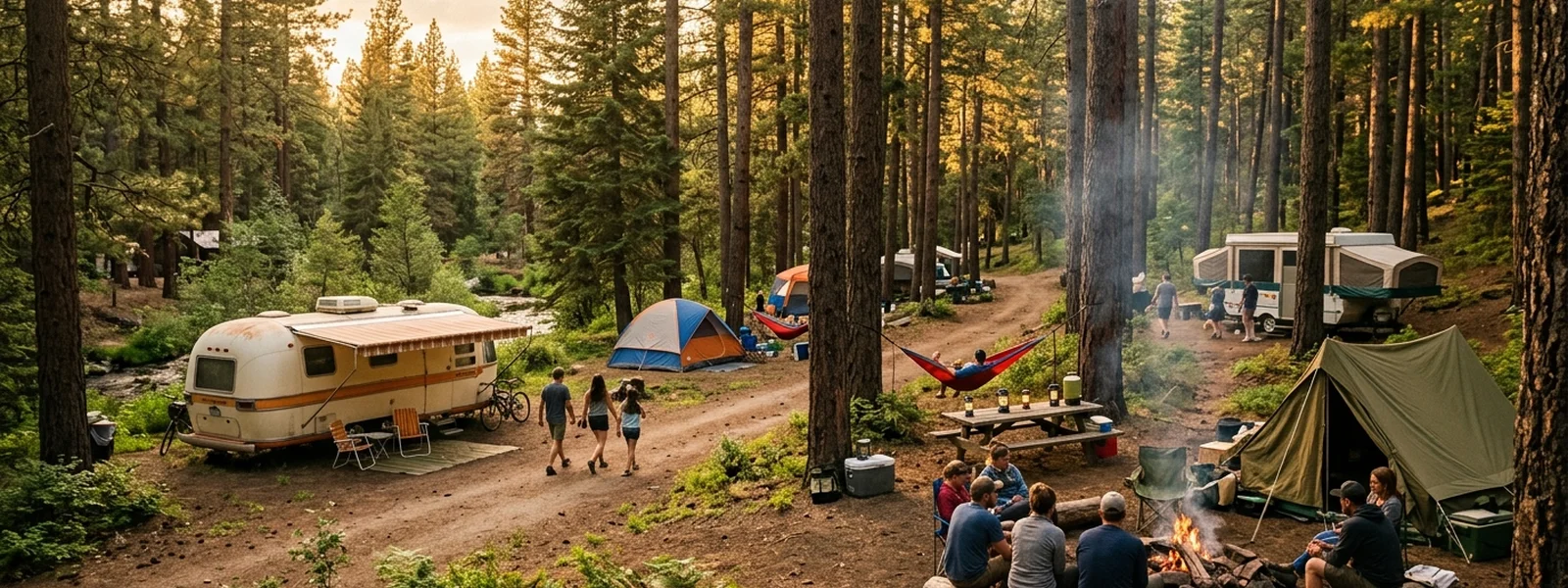
We started Camp Life Shirts because we wanted camping gear that actually feels like camp — not some slick outdoor brand trying to sell you a lifestyle. We camp in state parks, cook questionable meals over a fire, and argue about the best way to stack firewood. These shirts are for people like us. But every once in a while, we trade the familiar pine trees and damp soil for the open, dusty expanse of the desert. And let me tell you, the desert is a completely different beast.
It is beautiful, vast, and entirely unforgiving if you show up unprepared. If you are planning a trip to Joshua Tree, Moab, or anywhere with more sand than shade, you need solid desert camping tips. It is not like pitching a tent in your local woods. You cannot just wing it and hope for the best. The environment actively works against you, but if you respect it and prepare properly, it offers some of the best camping you will ever experience. Here is how to survive and actually enjoy your time in the sand.
Water Is More Important Than You Think. Bring More.
Let's talk about water. Whatever amount you think you need, double it. Then maybe add another gallon just to be safe. When you are figuring out what to pack for desert camping, water should be at the very top of your list, written in bold, permanent marker. The absolute minimum rule of thumb is one gallon per person, per day. But that is just for drinking. You also need water for cooking, cleaning up those questionable meals, and washing the dust off your face.
The desert air is incredibly dry. You will sweat, but the sweat evaporates so fast you won't even realize you are losing moisture. You won't feel sticky, you will just feel thirsty when your body is already dehydrated. Bring large, rigid water jugs with spigots. Keep them in the shade. Do not rely on cheap plastic water bottles that will just heat up in the sun and taste like warm plastic by noon.
And remember, dogs need just as much water as you do, if not more. If you are bringing your dog, pack an extra bowl and keep it filled. Watch them closely for signs of heat exhaustion. If you are thirsty, they have been thirsty for an hour.
Sun Protection Is Not A Joke: Hats, Long Sleeves, Shade
The sun in the desert does not mess around. It will find you, and it will cook you. If you want to know how to stay cool desert camping, the first step is keeping the sun off your skin entirely. You might be tempted to wear a tank top and shorts. Don't. Or at least, don't do it during the peak heat of the day.
Look at people who live and work in the desert. They wear long sleeves and long pants. A lightweight, breathable long sleeve shirt is your best friend. It keeps the sun off your arms and traps a tiny layer of sweat that acts like a personal air conditioning system. Add a wide-brimmed hat. Not a baseball cap that leaves your neck exposed to burn, but a real, goofy-looking sun hat.
You also need to bring your own shade. Desert campsites rarely have trees, and the ones they do have are usually just thorny bushes that offer zero relief. If you do not bring a pop-up canopy, an awning, or a tarp, you will end up hiding in your hot car by midday. Setting up a shade structure should be the very first thing you do when you arrive at your site.
Dealing With Extreme Temperature Swings
Here is one of the most crucial desert camping tips that catches beginners off guard: the desert is hot during the day, but it gets freezing at night. Without moisture in the air or cloud cover to hold the heat in, the temperature drops like a rock the second the sun goes behind the horizon. You can be sweating through your shirt at 4 PM and shivering in your camp chair by 8 PM.
This means layering is non-negotiable. You need that lightweight long sleeve for the afternoon sun, but you also need a solid hoodie or thick sweatshirt for the evening. If you are sitting around the campfire, you want something warm that you do not mind getting smelling like smoke. Pack a beanie and warm socks for sleeping.
Your sleep system needs to handle the cold. A flimsy summer sleeping bag will not cut it. Bring a bag rated for at least 30 degrees, and make sure you have a good sleeping pad. The cold ground will suck the heat right out of your body. If you are sleeping in a tent, keep the rainfly on to trap a little bit of your body heat inside the dome.
Desert Safety: Snakes, Scorpions, And Flash Floods
Let's talk about desert safety. The desert is full of things that poke, sting, and bite. Most of them want to leave you alone, but you need to be smart about how you move around. Never put your hands or feet somewhere you cannot see. That means no reaching blindly under rocks, into crevices, or into thick bushes when you are looking for firewood.
Shake out your boots before you put them on in the morning. Scorpions love dark, warm places, and your hiking boots look like a five-star hotel to them. Keep your tent zipped shut at all times. Not just the screen, the whole thing. If you leave it open for even a minute, something will probably crawl inside to escape the sun.
Then there is the weather. Flash floods are real and they are terrifying. It does not even have to be raining where you are. A storm miles away can send a wall of water down a dry wash faster than you can pack up your gear. Never set up your tent in a dry riverbed or a low-lying depression. It might look flat and comfortable, but it is a trap. Always camp on slightly elevated ground.
Your Vehicle Is Your Lifeline
When you are camping in the woods, a car breakdown is an inconvenience. When you are camping in the desert, a car breakdown is a serious problem. Your vehicle is your air conditioning, your heavy gear hauler, and your only way out. Before you head into the sand, you need to make sure your car is ready for the abuse.
- Check your tires: Desert dirt roads are notoriously rough. They are covered in sharp rocks, washboards, and deep sand. Make sure your tires have good tread and are properly inflated.
- Bring a full-size spare: A donut spare tire is useless on a rocky dirt road. Make sure you have a real spare, a jack that actually works, and the knowledge of how to use them.
- Pack extra fluids: Bring extra coolant and oil. The heat puts a massive strain on your engine, especially if you are driving slow over rough terrain.
- Bring a shovel and traction boards: Getting stuck in loose sand is almost a rite of passage. A small folding shovel and some cheap traction boards can save you a very expensive towing bill.
Navigating and Finding the Right Spot
Finding a good spot in the desert often means going off the beaten path. A lot of the best desert camping is on BLM (Bureau of Land Management) land where there are no designated sites. If you have never done this before, you should read our breakdown on The Pros and Cons of Dispersed Camping (And How to Find Spots). It is a different game than pulling into a numbered state park site.
When you are out there, navigation gets tricky. Everything looks the same. Every cactus, every rock formation, every dusty dirt road looks identical to the last one. Do not rely on your phone's GPS. You will lose cell service almost immediately. Download offline maps before you leave home, and bring a physical paper map just in case. Pay attention to landmarks. It is incredibly easy to go for a short hike to stretch your legs and completely lose your campsite.
The Wind Will Test Your Patience
Nobody warns you about the wind. Desert wind can be relentless. It usually picks up in the late afternoon and will try its hardest to tear your tent down. When you pitch your tent, stake it down immediately. Do not wait until later. I have watched a tent blow across a desert landscape like a massive nylon tumbleweed because someone thought they could stake it down after they had a beer.
Use heavy-duty stakes, not the cheap plastic ones that come with most tents. The ground is often hardpan dirt or solid rock just below the surface. You might need a mallet to drive them in. If the ground is too hard or too sandy for stakes, use large rocks to weigh down the corners of your tent and tie off your guy lines. Keep your camp chairs folded up when you are not using them, or they will end up a mile down the road.
Keep Your Camp Kitchen Simple
Cooking in the desert is a dusty affair. The wind will blow sand into your eggs, and your camp stove will struggle to stay lit. Keep your meals simple. Pre-chop your vegetables at home and put them in containers. Bring foods that do not require a ton of water to cook or clean up. Pasta is great, but boiling it uses a lot of water that you then have to dump out.
And do not forget the morning routine. Waking up in the freezing cold desert air requires a hot drink immediately. Check out A Simple Guide to Camp Coffee (Because Bad Coffee is a Crime) to get your morning started right. Just remember to pack out your coffee grounds. Leave No Trace is especially important in the desert, where organic matter takes decades to decompose due to the lack of moisture.
The Desert Pace
Finally, one of the best desert camping tips is simply to slow down. You cannot fight the desert. You have to work with it. During the hottest part of the day, do what the animals do: find some shade and do absolutely nothing. Read a book, take a nap, drink some water. Save your hiking and exploring for the early morning or late afternoon when the light is incredible and the temperatures are manageable.
The desert forces you to strip away the unnecessary parts of your routine. It is harsh, yes, but it is also incredibly quiet and peaceful if you let it be. Pack smart, respect the environment, and enjoy the stars. You won't find a better view anywhere else.

Published by Camp Life Shirts
Wear the Wilderness
Frequently Asked Questions
How much water should I bring desert camping?
The general rule is one gallon of water per person, per day. This covers drinking, cooking, and basic hygiene. Bring extra if you plan on doing strenuous hikes or have dogs with you.
How do you stay cool while camping in the desert?
Create your own shade with a canopy or tarp, as natural shade is scarce. Wear loose, lightweight long sleeves to protect your skin from the sun. Rest during the hottest part of the afternoon and save activities for the morning.
Are scorpions a big problem when desert camping?
They are present, but usually avoid people. Always shake out your shoes before putting them on and keep your tent zipped up. Never reach blindly under rocks or logs when looking for firewood.
What kind of tent stakes work best in the desert?
Leave the cheap plastic stakes at home. You need heavy-duty steel or aluminum stakes to penetrate hardpan dirt. In loose sand, use specialized sand anchors or tie your guy lines to large rocks.
Is it safe to sleep under the stars in the desert?
Yes, but use a cot or a thick sleeping pad to stay off the cold ground. Keep your sleeping area clear of brush where critters might hide. Be prepared for the temperature to drop significantly at night.
First Look at New Camping Shirt Drops
New designs, camp tips, and first access to new camping shirts — straight to your inbox, no fluff.