
The Shift from Day to Night
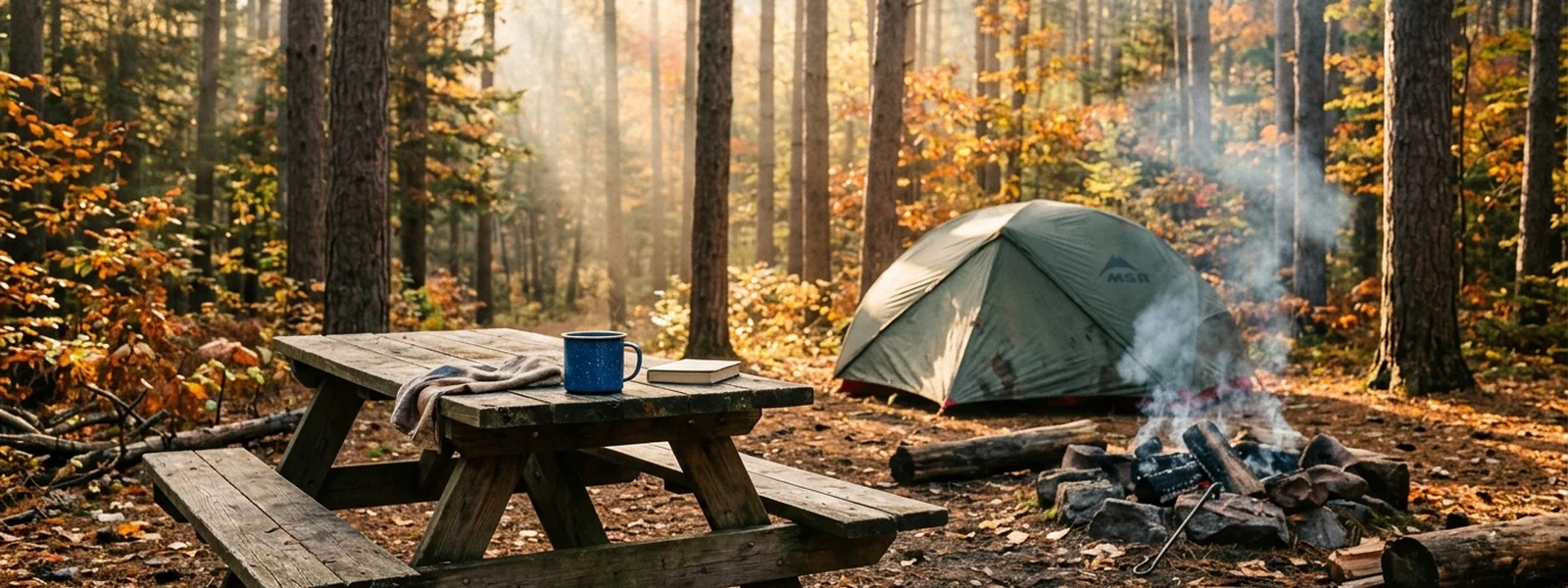
There is a specific point in the evening when the campsite completely changes. The busy energy of the afternoon fades away. The wet swimsuits are hung over a line between two pine trees. The paper plates from dinner are burned. The cooler is firmly latched and shoved into the trunk of the car. The sun dips below the tree line, the temperature drops ten degrees, and you pull your folding chair a little closer to the fire ring.
You know the smell. It gets into your hair, your clothes, and your tent. You can wash your favorite shirt three times when you get home, and it will still smell faintly of pine wood and ash. That is the smell of a good trip. When the woods get dark, the circle of light around the fire becomes your entire world. You stare into the glowing orange coals, someone pokes a log with a stick, and the real work of the evening begins.
This is the perfect time for campfire stories. We all have them. Some are passed down from older relatives who swore they were true. Some we make up on the spot just to mess with our friends. Some are just slightly exaggerated retellings of the time someone tripped over a tent guyline in the dark. Sitting in the dirt and talking around a fire is a tradition as old as humanity itself.
The Setup for a Great Tale
You cannot force a story. If you try to launch into a narrative while people are still fighting over the last graham cracker, you will fail. Good campfire stories require the right atmosphere and the right timing. You have to wait for the lull in the conversation. You need that specific quiet that only happens outside at night, where the loudest sound is the snap of a dry branch in the flames or the distant hoot of an owl.
When the group settles down and people start staring blankly into the fire, that is your cue. You don't announce that you are going to tell a story. You just start talking. You keep your voice low so they have to lean in to hear you. You let the natural shadows of the fire do the heavy lifting.
Over the years, we have heard and told hundreds of tales. Some were terrifying, some were hilarious, and some just made us glad to be sitting in the woods with good people. Here are a few of our favorites to get you started on your next trip.
The Legend of the Phantom Ranger
When it comes to scary stories for camping, you want to walk a fine line. You want it to be spooky enough to make people look over their shoulders, but not so terrifying that no one can sleep in their tent later. The Phantom Ranger is a classic local legend that fits the bill perfectly. Almost every older state park has some variation of this tale.
The story goes like this. Back in the late seventies, a massive storm rolled through the valley completely unannounced. The wind was howling, snapping tree branches and washing out the main trail. A lone hiker was caught up on the ridge, miles from the campground. It was pitch black, freezing cold, and the hiker had lost the trail in the mud.
Just as the hiker was preparing to huddle under a rock ledge for the night, they saw a faint yellow glow moving through the trees. It was a park ranger, wearing an old-style uniform and carrying a heavy brass kerosene lantern. The ranger didn't say a word. He just motioned for the hiker to follow. For two hours, the ranger led the way through the storm, his lantern cutting through the driving rain. He navigated washouts and fallen trees with ease.
Finally, they reached the edge of the paved campground road. The hiker turned around to thank the ranger, but there was no one there. Just the dark woods and the sound of the rain. The yellow light was completely gone.
The next morning, the hiker went to the ranger station to report the incident and thank the man who saved them. The head ranger listened quietly, then shook his head. He explained that no one had been out on the ridge the night before. All staff were accounted for in the valley. Furthermore, the park hadn't used brass kerosene lanterns since 1978, when a ranger had tragically slipped on that exact same ridge during a storm and was never found.
They say if you camp near the ridge trail on a windy night, you can still see a faint yellow glow moving slowly through the pine trees. It is a simple story, but when the wind rustles the leaves just right behind your tent, it works every time.
The Great Raccoon Heist of 2019
Not all tales need to be spooky. Some of the most genuinely good campfire stories are just retellings of our own terrible planning and embarrassing wildlife encounters. This is a true story from a trip a few years ago. We thought we were seasoned campers. We had the right gear. We had a solid plan. If you are wondering how to put together a capable group so you avoid situations like this, check out our guide on What's a 'Camp Crew'? Ideas for Your Next Group Trip.
Anyway, we had a heavy-duty cooler. We thought it was wildlife-proof. We had pushed it under the picnic table and gone to sleep. Around 2 AM, I woke up to a strange, rhythmic dragging sound. It sounded like someone was slowly pulling a heavy box across the gravel. I unzipped my sleeping bag, grabbed my headlamp, and quietly unzipped the tent door.
I clicked on the light. There, sitting in the middle of the campsite, were five raccoons. They were not scared. They were organized. They were working like a professional pit crew. Two of them were standing on top of the cooler, working the heavy rubber latches with their creepy little hands. One was acting as a lookout by the fire ring. Two others were waiting on the ground to receive the stolen goods.
I yelled and waved my arms. Three of them scattered into the brush. But the two on the cooler just stopped and stared at me. The lookout raccoon actually hissed. In my panic to get out of the tent and save our breakfast, I caught my boot on the tent guyline. I went down hard in the dirt, knocking over a camp chair and a metal water bottle.
By the time I scrambled back to my feet, the cooler was popped open. One raccoon was running into the dark with an entire package of hot dogs in its mouth. The other had a block of cheddar cheese. They didn't even run fast. They just trotted away, completely victorious.
We ate dry cereal for breakfast the next morning. The lesson here is simple: raccoons do not care about your expensive gear. They do not care that you drove three hours to get to the campsite. They only care about hot dogs, and they are smarter than you.
The Sky Clearing
Sometimes you just need a story that reminds you why you sleep on the ground in the first place. If you are looking for family campfire stories that won't cause nightmares, this is the kind of memory you want to share. It was late October, and it had been pouring rain for two straight days.
We were damp. The firewood was damp. The dog smelled terrible. We spent most of the time huddled under a tarp, playing cards and reading articles like Rainy Day Camping: 7 Ways to Not Be Totally Miserable just to keep our sanity. Everyone was grumpy. We were seriously considering packing up the wet tent and driving home a day early.
Then, around 9 PM on the second night, the rain just stopped. The wind picked up and blew the heavy clouds out of the valley. The sky opened up completely. Because the storm had washed all the dust and haze out of the air, the stars were brighter than I had ever seen them. You could see the entire milky way stretched across the sky.
We finally got a fire going with some dry wood we had kept in the car. We pulled our wet chairs up to the heat. Nobody said much. We just sat there, watching the fire dry our boots, looking up at the sky. We saw three shooting stars in the span of an hour. The damp chill faded away, replaced by the warmth of the fire and the quiet of the woods. It turned the worst trip of the year into the most memorable one.
Tips for Telling a Great Story Around the Fire
You can have the best material in the world, but if your delivery is off, you will lose the crowd. Telling a story outside is different than telling a joke at a bar. You have to compete with the dark, the cold, and the distraction of the fire. Here are a few tips for holding your audience captive.
- Wait for the coals: Do not start a story when the fire is roaring and popping wildly. Wait until it burns down to a steady, glowing bed of red coals. The lighting is better, the noise is lower, and the mood is much more relaxed.
- Drop your volume: When you start talking, speak a little softer than you normally would. Make people lean forward to hear you. It naturally draws them into the narrative and makes the woods around you feel much bigger and quieter.
- Use the pauses: Silence is your best tool. When you reach a suspenseful part of the story, just stop talking for three seconds. Let the crackle of the fire fill the gap. It builds tension better than any words could.
- Know your audience: If you have young kids in the circle, skip the axe-murderer tales. Stick to funny animal encounters or mild, spooky legends. You want them to enjoy the woods, not be terrified of every shadow.
- Keep it brief: Attention spans are short, especially when people are tired from hiking all day. Keep your stories under ten minutes. Hit the main points, deliver the punchline or the scare, and let someone else take a turn.
Keep the Tradition Alive
The next time you are sitting around a fire ring, don't just stare at your phone until it's time to sleep. Ask someone to tell a story. It doesn't have to be a masterpiece. It just has to be shared.
Whether it is a spooky local legend, a funny memory of a disastrous trip, or just a quiet observation about the woods, campfire stories are what turn a basic weekend in the dirt into a trip you will talk about for years. So stack the wood, pull up a chair, and tell us something good.

Published by Camp Life Shirts
Wear the Wilderness
Frequently Asked Questions
What makes a good story to tell around the fire?
The best tales are relatable and fit the mood of the group. A mix of suspense, humor, and a little bit of local woods lore usually keeps everyone engaged without being overly complicated.
Are scary stories good for kids at a campsite?
It depends on the age, but generally, you want to keep it mild. Stick to funny animal encounters or light mysteries rather than terrifying horror, so everyone can sleep peacefully in their tents.
How do you keep people's attention when telling a story outside?
Keep your voice low so they have to lean in to hear you. Use the natural pauses in the fire's crackle to build suspense, and keep the story under ten minutes so you don't lose the crowd.
Do you need to memorize a story before a trip?
Not at all. The best tales often come from your own past camping trips. Embellish the details of a true funny mishap, and it will sound much more natural than a rehearsed script.
What is the best time of night to start telling stories?
Wait until dinner is completely cleaned up and the fire has burned down to a nice bed of glowing coals. That quiet period right before people start yawning is the perfect window.
First Look at New Camping Shirt Drops
New designs, camp tips, and first access to new camping shirts — straight to your inbox, no fluff.